
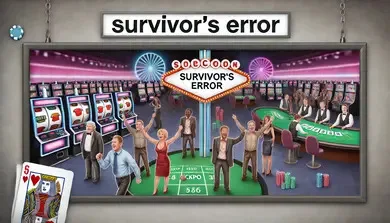
Systematic Mistake of a Gambling Survivor
Online gambling has become a widely accessible form of digital entertainment, allowing players to take part in casino games through websites and mobile devices at almost any time. This accessibility also creates an environment in which decisions are often made quickly and under conditions of uncertainty. In such situations, people may rely on mental shortcuts rather than carefully evaluating all available information. These cognitive biases can influence how players interpret past results, assess probability and form expectations about future outcomes. One particularly relevant example is survivorship bias, sometimes described as the survivor’s error, which can distort judgement by drawing attention towards visible successes while less noticeable outcomes receive far less consideration.
What is a Systematic Error?
A systematic error refers to a consistent, predictable error that occurs due to inherent biases or flaws in the decision-making process. Unlike random errors, which are sporadic and unpredictable, systematic errors stem from misjudgments and can significantly distort reality and expectations.
The Essence of Survivor’s Error
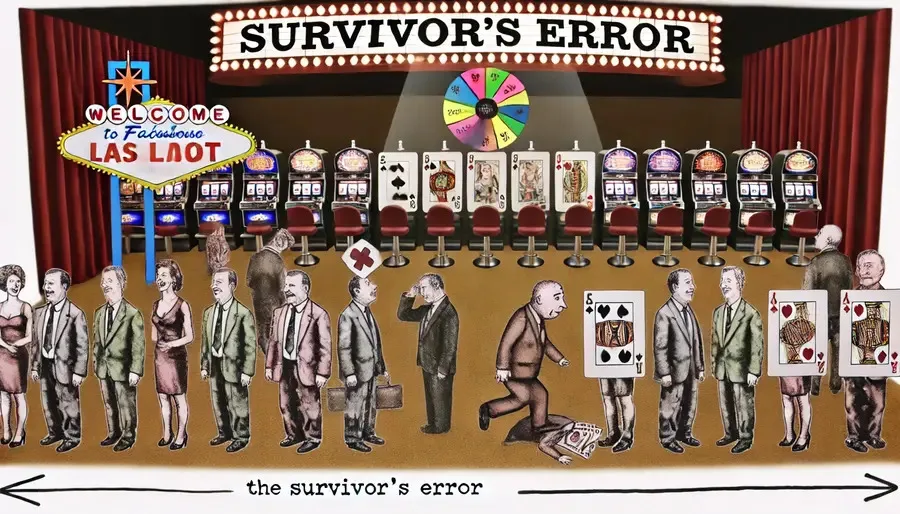
Survivor’s error, also known as survivorship bias, is a logical fallacy where individuals focus on successful outcomes while ignoring failures. This bias often leads to erroneous conclusions because the available data is incomplete. In gambling, this means giving undue attention to winners while disregarding the numerous losers, creating a skewed perception of success.
Manifestation of Survivor’s Error in Gambling
In the context of gambling, survivor’s error manifests in several ways:
- Overestimating Success Rates: Players might believe that winning is more common than it actually is because they primarily hear stories of big wins.
- Ignoring Losses: The numerous losses and bankruptcies go unnoticed, leading to a false sense of security and optimism.
- Risky Behavior: Encouraged by the perceived success of others, players may engage in riskier bets, believing they too can defy the odds.
Consequences for Players
The consequences of falling victim to survivor’s error in gambling can be severe:
- Financial Losses: Misjudging the actual chances of winning often results in significant financial losses.
- Psychological Impact: Persistent losses can lead to stress, anxiety, and even addiction as players chase the elusive big win.
- Misguided Strategies: Players may adopt flawed strategies based on the misconception that success stories are the norm rather than the exception.
Methods to Counteract Survivor Error
To mitigate the effects of survivor’s error, players can adopt several strategies:
- Critical Thinking: Always question the sources of your information. Acknowledge that success stories are rare and often publicized more than failures.
- Statistical Understanding: Educate yourself on the actual odds and probabilities in gambling. Recognize that casinos are designed to have a house edge.
- Balanced Perspective: Seek out stories of both wins and losses. Understanding the full spectrum of outcomes helps in forming a realistic view.
- Limit Setting: Establish strict limits on time and money spent on gambling to avoid the trap of chasing losses.
The Role of the Gambling Industry
The gambling industry can play an important role in reducing the influence of survivorship bias by presenting gambling outcomes, probabilities and risks in a clear and balanced manner. Here’s how:
- Transparency: Providing clear, accessible information about the odds and risks associated with gambling can help players make informed decisions.
- Promoting Responsible Gambling: Initiatives that encourage setting limits and recognizing the signs of gambling addiction can prevent players from falling into the survivor’s error trap.
- Balanced Marketing: While success stories attract players, casinos should also highlight the importance of responsible gambling and the reality of losses.
Survivor’s error is a prevalent cognitive bias in the gambling world, leading players to overestimate their chances of success and underestimate the risks involved. By understanding this bias and implementing strategies to counteract it, players can make more informed and balanced decisions. The gambling industry also has a responsibility to promote transparency and responsible gambling practices, ensuring a safer and more realistic gaming environment.
Lignende artikler
-
 Money Bonuses in Online Casino
Why do online casinos provide bonuses to clients? Easy. To …
-
 A bit of fruit: Famous fruit slots
Fruit slots are the oldest idea in gambling history. For …